
Our site is reader-supported. When you buy through links on our site, we may earn an affiliate commission.
Running in the heat sounds appealing until you step outside at 9 a.m. and you feel as if you just walked into a sauna. Heat impacts every runner, beginners and advanced runners alike. The good news is that with a few adjustments, you can keep running in the heat without being too miserable.
Here’s everything you need to know to survive running in the heat.
Why Heat Makes Running Harder
When the temperature climbs, your body has to juggle two jobs at once: powering your muscles and cooling you down. Blood gets redirected to your skin to release heat through sweat, which means less blood reaching your muscles. Your heart rate climbs, you fatigue more quickly, your pace decreases, and you feel like you’re working much harder than on a similar run you did in cooler temps.
The silver lining? Training in heat does have it benefits when done safely. Your heart gets better at pumping blood under stress, your blood plasma volume increases (which helps with cooling), and your body learns to sweat earlier and more efficiently. Research has found that runners who acclimatize to heat can improve their performance in cooler conditions by more than 5%. This is where the saying “fall PRs are made in the summer”.
But to get those benefits, you have to survive training first.
1. Give Your Body Time to Adjust
If your climate shifts from cold to hot, don’t expect to run the same way on the first hot day of May as you did on a cool day in March. Your body needs roughly two weeks to adapt to the heat. During that time, focus on effort, not pace.
2. Adjust Your Intensity
Especially hot or humid days are not the best days for speed work or long efforts. Going fast generates more body heat, and in high temperatures, that could be a recipe for disaster. When able, swap your hard workouts for easy miles when it’s hot, and save the tempo runs and intervals for cooler mornings, evenings, or head to the treadmill.
3. Pre-Hydrate
Don’t wait until you’re thirsty to start thinking about hydration. Drink plenty of water and electrolytes the day before a hot run, not just in the hour before. By the time you feel thirsty, you’re already playing catch-up. A good rule of thumb: your urine should be pale yellow before you head out the door. Dark yellow means you’re starting the run already behind.
4. Carry Water — No Matter How Short the Run
On any run over 30 minutes in the heat, carry water. A handheld bottle, a running vest, or a hydration belt all work. Even on shorter runs, knowing you have water available takes one stressor off your plate. There’s no minimum distance that makes carrying water unnecessary when it’s hot out. You can also use the water to help cool your body down from the outside, splash water on your wrists, shoulders, or even the back of you neck.
5. Adjust Your Route
Look at your usual route and ask yourself: Is most of it exposed pavement? Can you swap it for a path through a more shaded area? Can you plan the loop so you pass by a water fountain midway? It’s worth rerouting to find shade, cut down on blacktop (which holds heat), and give yourself options if you need to cut the run short. Asphalt and concrete radiate heat upward, making conditions noticeably worse than running on a shaded trail.
6. Dress for the Heat
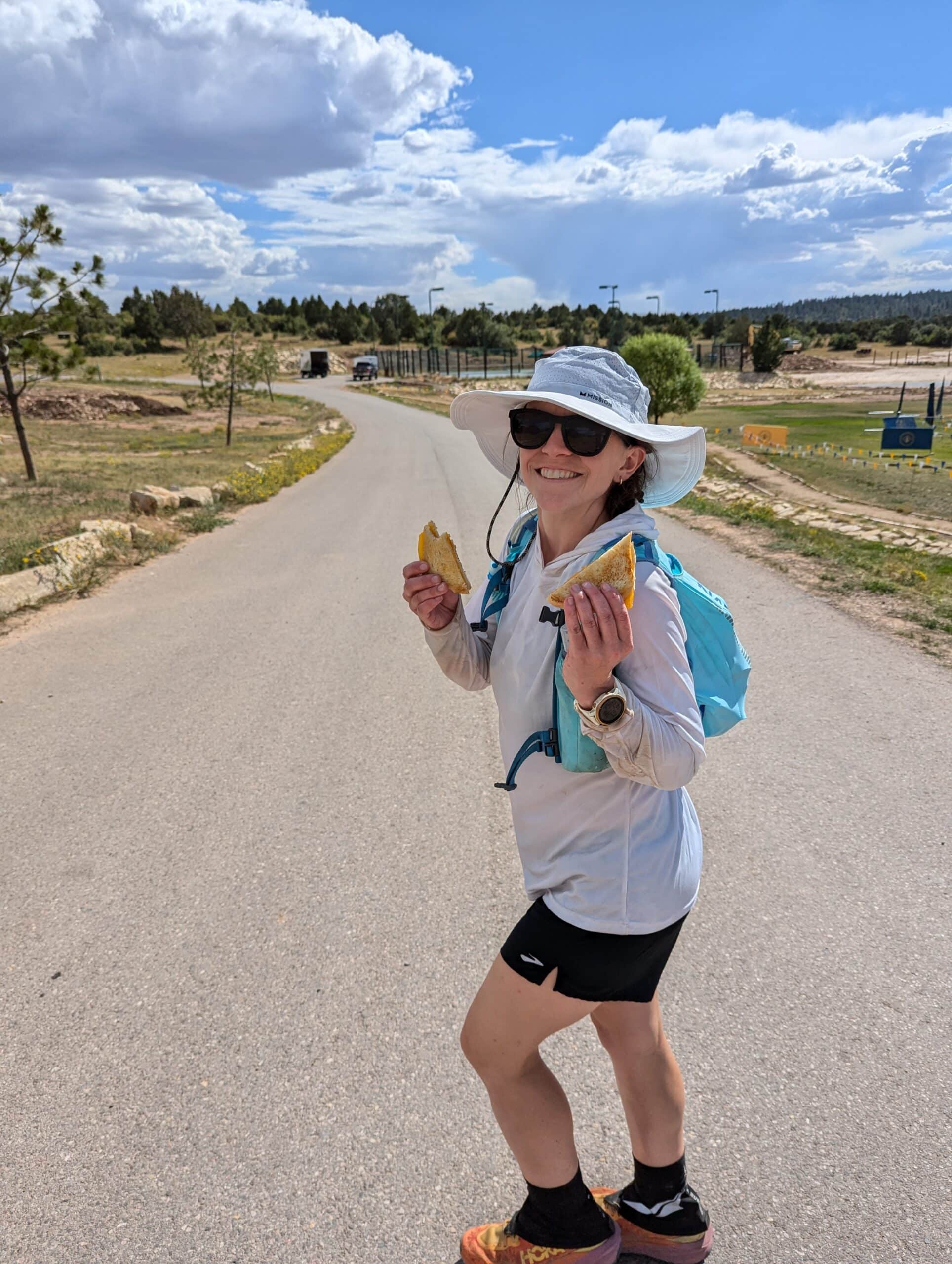
Wear light-colored, loose, moisture-wicking fabrics that don’t trap heat against your body. A wide-brimmed running hat keeps direct sun off your face and neck. UPF-rated clothing offers added protection on long runs. Avoid dark colors and anything that fits tightly enough to restrict airflow.
My Favorite UPF Shirt – tip wet the shirt before and during the run to help you stay even more cool
My Favorite Wide Brimmed Hat – wore this to keep the sun off my face during a 100 mile race in 90+ degrees
7. Apply — and Reapply — Sunscreen
Use a sweat-resistant, broad-spectrum SPF 30 or higher on all exposed skin. If you’re out for more than an hour, reapply to exposed areas.
My Favorite Sunscreen – it’s thick but I don’t feel that it “washes” off as quickly
8. Use Mid-Run Cooling Tricks
Cooling your body externally works. Splash cold water on your wrists, neck, and head at aid stations or water fountains — these areas have blood vessels close to the skin and help lower your core temperature quickly. Ice in a bandana tied around your neck is a trick many runners swear by on particularly brutal days. Don’t wait until you feel terrible to use these tactics; use them proactively.
9. Know the Warning Signs
Heat exhaustion and heat stroke are serious and can come on fast. Know the difference. Heat exhaustion looks like heavy sweating, weakness, cool or pale skin, nausea, and a fast but weak pulse. Heat stroke is a medical emergency — the skin becomes hot and red, sweating may stop, and confusion or loss of consciousness can occur. If you or someone around you shows signs of heat stroke, call 911 immediately and work to cool the person down while waiting for help. If something feels off during a run in the heat, it’s always the right call to stop.
Before You Go
Summer running humbles everyone…yes even elites. When the temperatures first start to rise, give yourself grace and maybe cover your watch so you can’t see the pace. The most important reminder is to be smart and listen to your body. No run, no workout is worth getting heat exhaustion over.
Thanks for reading my blog on running in the heat! You can find nutrition and running tips here and more about my nutrition coaching services for runners here.

Hi, I'm Amy aka the Running Dietitian. An expert in all things running and nutrition.