

In this post learn more about what is carb loading, when carb loading should be implemented, and the 20 best foods for carb loading.

Carbohydrates are the body’s main source of energy. During exercise, your body will use stored carbohydrates to provide you with energy. Your body will store these carbohydrates that you consumed as glycogen in both your liver and muscles.
Carb loading is an essential nutrition strategy to increase the amount of glycogen that is available to your body to utilize during exercise.
Research has shown that the body can store approximately 90 minutes worth carbohydrates to be used as fuel for endurance exercise.
This is where carb loading comes into play. It is recommended to carb load for any race that will last ~90 minutes in length or longer.
Research has found that carb loading can increase performance by 2-3%, delay fatigue and help you avoid the dreaded hitting the wall feeling.

Inside the Marathon Fueling Blueprint, created to help runners perform their best from start to finish. This guide shows exactly what, when, and how to fuel from taper to race day to recovery so you stay energized, hydrated, and recover efficiently. Grab your guide here!
Carb loading will begin during race week. The time you will need to carb load will depend on the event you are training for, carbohydrate needs, and what is do able to you. Carb loading will last anywhere from 1-3 days.
Needs: 8-12 g/kg body weight
For example: 150 lb pound runner
150 lb / 2.2 = 68.1 kg
10-12g x 68.1 kg = 545-817 g carbohydrates
In practice, 12 g per kg is often unrealistic for many runners, particularly when it requires 750+ grams of carbohydrates. Rather than forcing that target, a better approach is to slightly reduce the daily goal and prioritize higher carbohydrate intake over several days. This may mean carb loading for 3 days vs 2 for a marathon.
Race Specific Guidelines
Half-Marathon: 1-2 day carb load
Marathon: 2-3 day carb load
Ultra Marathon: 3 day carb load
8 g/kg x 3 days for a marathon or 2 days for half
10 g/kg x 2 days for a marathon or 1 day for a half
Calculate your Carb Loading Needs
Enter your weight and select your race distance.
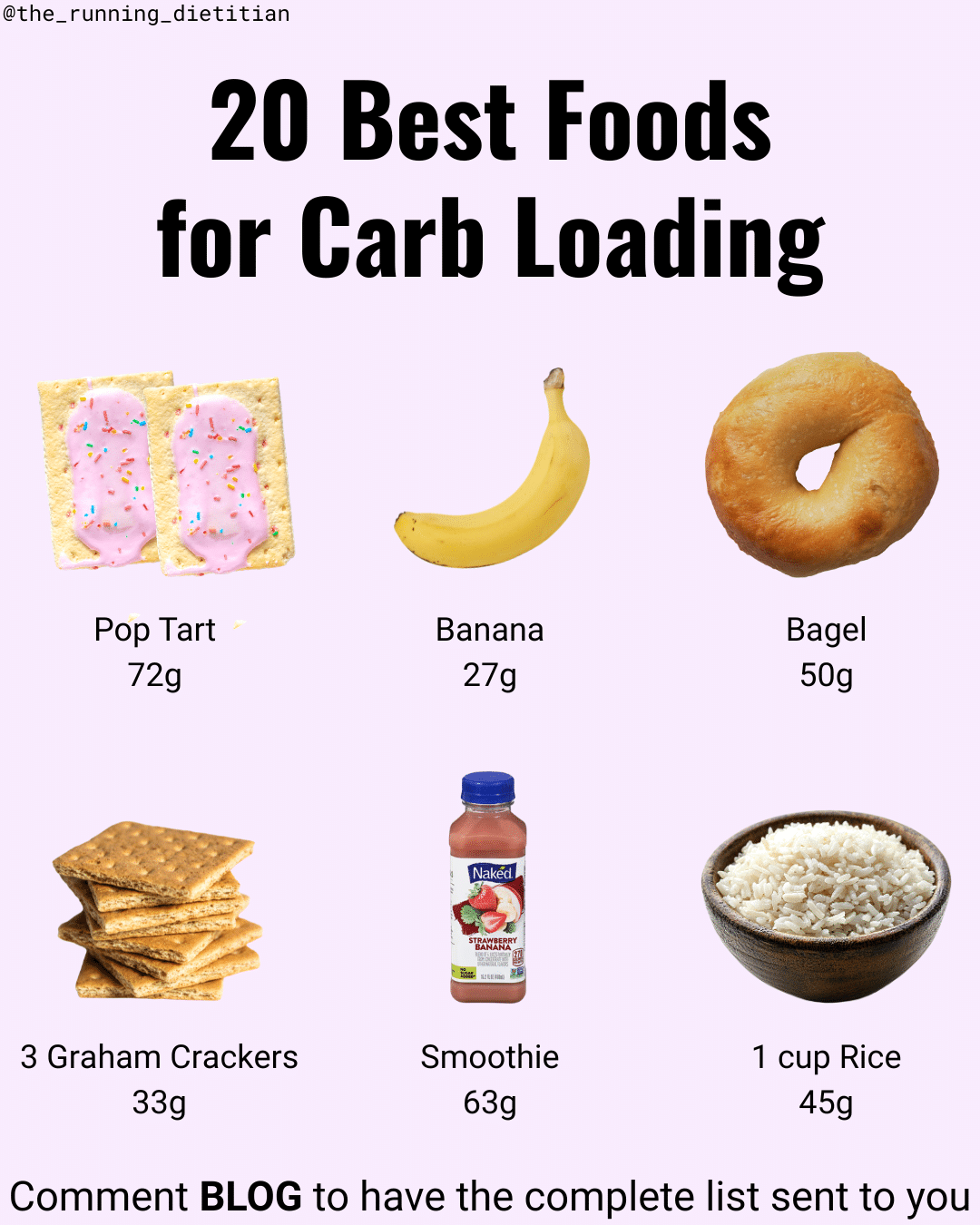
Here’s the list of the 20 best foods for carb loading. Below you will see the size and approximate amount of carbohydrates it contains. The amount of carbohydrates can vary depending on the brand.

Carb loading is a science-backed strategy that can enhance endurance performance by maximizing your glycogen stores. When done correctly, it can help you sustain energy levels, delay fatigue, and optimize your race day performance. The key is to increase carbohydrate intake in the days leading up to the race while tapering. During this time focus on familiar, high carbohydrate foods.
Remember, every runner’s body responds differently, so practice your carb loading plan during training to see what works best for you. This can help determine which are the best foods for carb loading for you! With the right approach, you’ll toe the starting line feeling fueled, confident, and ready to run your best race.
Want to know what to eat the night before a marathon, or any endurance event, check out this post.

Hi, I'm Amy aka the Running Dietitian. An expert in all things running and nutrition.